
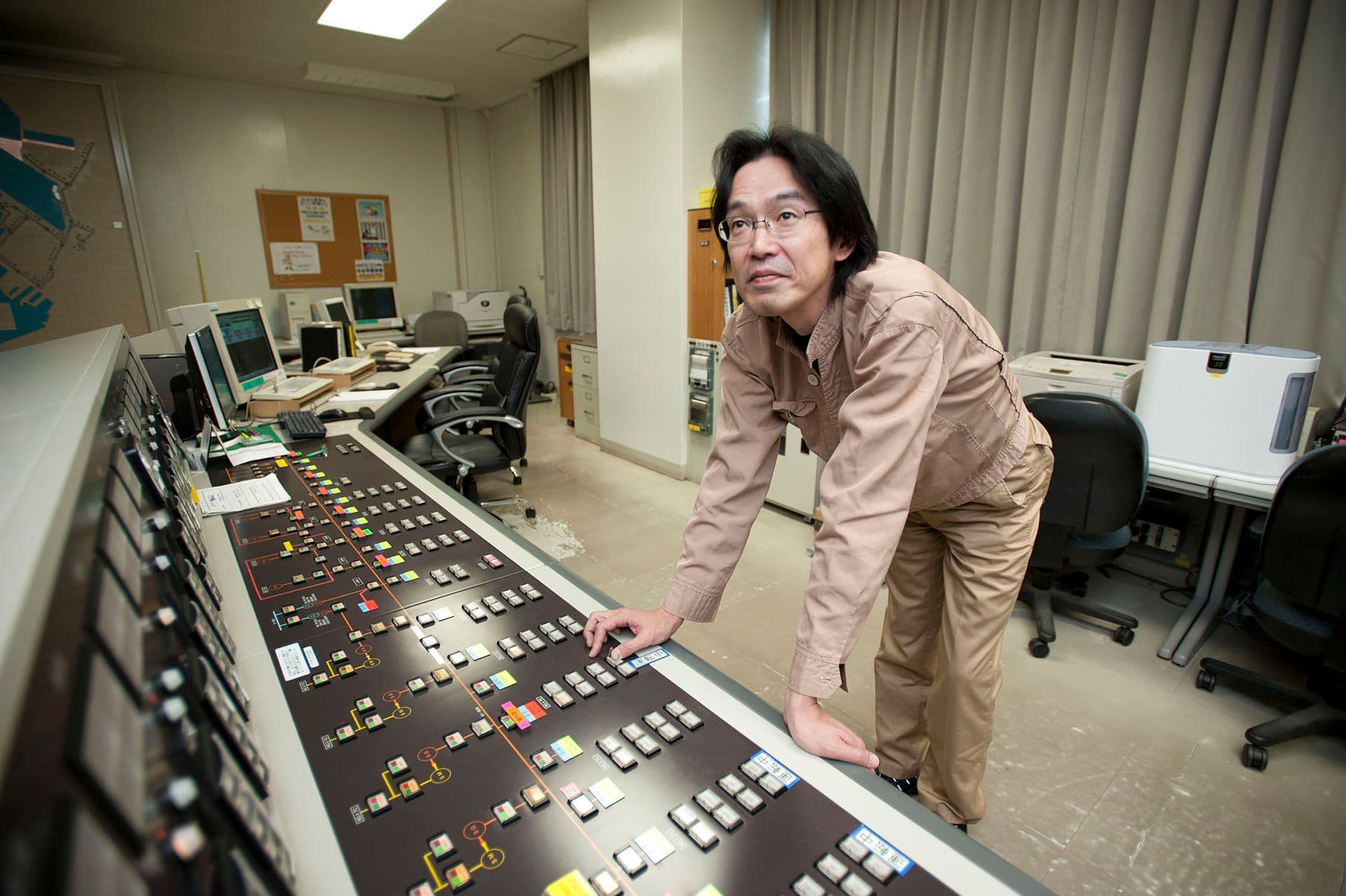
Supervisory Control and Data Acquisition (SCADA) is a real-time monitoring and control system that provides control room operators with continuous visibility into the status of substations, feeders and switching devices across an electrical distribution network. In South Africa, where ageing infrastructure, rapid urbanisation, load shedding and the integration of renewable energy sources are placing unprecedented demands on the grid, SCADA forms the operational foundation upon which advanced distribution automation capabilities are built. Understanding how SCADA, Substation Automation Systems (SAS), Outage Management Systems (OMS) and integrated Distribution Management Systems (iDMS) work together is essential for any utility planning grid modernisation.
How SCADA Works in Distribution Networks
A modern distribution SCADA system collects data from Remote Terminal Units (RTUs) and Intelligent Electronic Devices (IEDs) installed at substations and along distribution feeders. These field devices monitor voltage levels, current flow, power factor, frequency, breaker status and alarm conditions, transmitting readings to the SCADA master station at intervals typically ranging from one to five seconds.
The communication infrastructure connecting field devices to the control centre uses a combination of fibre optic, microwave radio, cellular and Power Line Carrier (PLC) links. In South African utility networks, IEC 60870-5-101 (serial) and IEC 60870-5-104 (TCP/IP) serve as the dominant SCADA communication protocols, providing standardised data exchange between RTUs, IEDs and the master station.
- Real-time monitoring of voltage, current, power factor and frequency at every substation
- Remote control of circuit breakers, reclosers and switching devices from the control room
- Alarm management with priority classification and automatic escalation
- Historical data logging for trend analysis, fault investigation and regulatory reporting
- Communication via IEC 60870-5-101/104 protocols over fibre, microwave, cellular or PLC
Substation Automation and IEC 61850
Substation Automation Systems (SAS) extend SCADA capabilities within the substation itself by networking protection relays, bay controllers and metering equipment over IEC 61850 communication. IEC 61850 introduces a standardised data model and Generic Object Oriented Substation Events (GOOSE) messaging that allow protection devices to communicate directly with each other at millisecond speeds.
- Fast bus transfer schemes executed via GOOSE messaging between protection relays
- Interlocking logic enforced digitally rather than through hardwired connections
- Adaptive protection settings that respond to changing network topology
- Standardised engineering files (SCL) reducing commissioning time and vendor dependency
South African utilities are progressively adopting IEC 61850 as they refurbish existing substations and build new ones, moving away from proprietary protocols that create vendor lock-in and increase long-term maintenance costs.
Outage Management and Fault Location (FLISR)
Outage Management Systems (OMS) sit on top of the SCADA layer and correlate device alarms, customer trouble calls and smart meter last-gasp notifications to automatically identify the probable location and extent of each outage. OMS applies network connectivity analysis to determine which customers are affected, calculates estimated restoration times and manages crew dispatch.
Fault Location, Isolation and Service Restoration (FLISR) automates the response to distribution faults, isolating the faulted section and rerouting power to unaffected consumers within seconds rather than hours.
FLISR is one of the highest-value distribution automation functions. When a fault occurs on a feeder, FLISR algorithms automatically identify the faulted section using fault indicators and SCADA data, open the isolating switches on either side of the fault, and close normally-open tie switches to restore supply to unaffected sections from adjacent feeders. This automated sequence reduces outage duration from hours to seconds for customers upstream and downstream of the fault, dramatically improving SAIDI and SAIFI reliability indices.
Integrated Distribution Management (iDMS)
Integrated Distribution Management Systems represent the convergence of SCADA, OMS, DMS analytics and Advanced Distribution Automation into a single operational platform.
- Volt/VAR optimisation reducing technical losses and improving power quality across the network
- FLISR automation for rapid fault isolation and supply restoration
- Optimal feeder reconfiguration balancing load across parallel feeders to minimise losses
- Demand response integration managing distributed energy resources and controllable loads
- Switching sequence optimisation for planned maintenance minimising customer interruptions
These capabilities are critical for South African utilities managing constrained networks where load growth outpaces infrastructure investment and where distributed solar PV installations are creating reverse power flow conditions that legacy protection systems cannot handle safely.
What This Means for South African Utilities
Load balancing and network optimisation become increasingly important as South African cities densify and industrial loads shift. iDMS algorithms analyse real-time load data from SCADA and AMI systems to recommend or automatically execute switching operations that redistribute load across parallel feeders, reduce losses and defer capital expenditure on new infrastructure. For municipalities under financial pressure, the ability to extract more capacity from existing assets is a compelling value proposition.
Hexing Electrical SA delivers SCADA, substation automation and distribution management solutions tailored to the operational realities of South African municipal and utility networks. From RTU hardware and IEC 61850-compliant substation integration to OMS and iDMS software platforms, Hexing provides the technology and local engineering expertise needed to transform reactive grid operations into proactive, data-driven network management.
Contact us to arrange a demonstration of our distribution automation platform for your network.